
New Supreme Court Ruling Creates Streamlined Path for President Trump to Remove Heads of Independent Regulatory Agencies
Jun 30, 2026, 10:00 AM GMT-4 | By Frank Gargano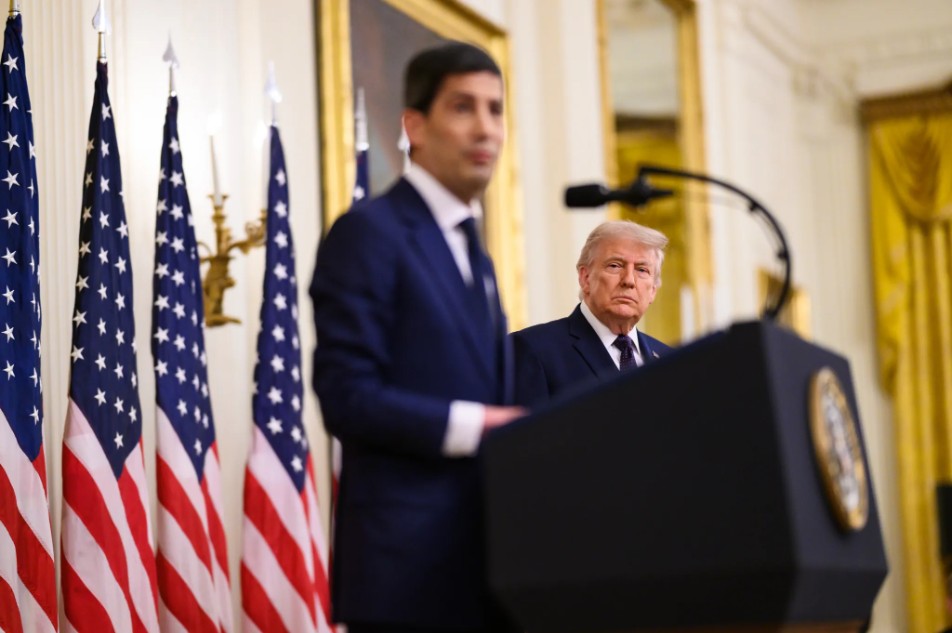
President Donald Trump (right) at Federal Reserve Chairman Kevin Warsh's swearing in (Source: White House)
The Supreme Court on Monday expanded President Trump’s ability to reform the leadership composition of independent regulatory agencies without cause, directly impacting the National Credit Union Administration (NCUA) and the Federal Deposit Insurance Corporation (FDIC).
The 6-3 decision reached in Trump v. Slaughter upholds the March 2025 firing of former Federal Trade Commissioner Rebecca Slaughter, which has been the subject of a heated lawsuit centered around the decades-old precedent established by a 1935 court ruling in Humphrey's Executor v. United States. This case granted Congress the ability to limit the president’s power to dismiss the heads of independent agencies, save for instances of “inefficiency, neglect of duty, or malfeasance in office,” according to the original decision.
The Humphrey ruling held that the “authority of Congress, in creating quasi-legislative or quasi-judicial agencies, to require them to act in discharge of their duties independently of executive control cannot well be doubted; and that authority includes, as an appropriate incident, power to fix the period during which they shall continue in office, and to forbid their removal except for cause in the meantime.”
The majority opinion in the Slaughter case stated that “although it is up to the Senate to decide whether to confirm those with whom the President would prefer to work, neither Congress nor the courts may saddle him with those with whom he cannot work.”
“Subordinates who exercise the President’s power are subject to removal by him …. Then, and only then, can they remain accountable to the President, and the President to the people,” Chief Justice Roberts, writing for the majority, said.
The dissenting opinions were authored by Justices Sonia Sotomayor, Ketanji Brown Jackson, and Elena Kagan. Sotomayor, joined by Jackson and Kagan, wrote in her dissent that today’s decision results in “a President who emerges with far greater power than ever before.”
“It is a power, however, that neither the People, nor Congress, nor the Constitution bestowed upon him,” Sotomayor said, writing for the minority. “In granting the President this unbridled authority, the Court upends its precedent, misconstrues our history, and sheds any pretense of judicial modesty.”
While Slaughter’s dismissal was upheld, similar efforts to remove Federal Reserve Gov. Lisa Cook yielded a different outcome.
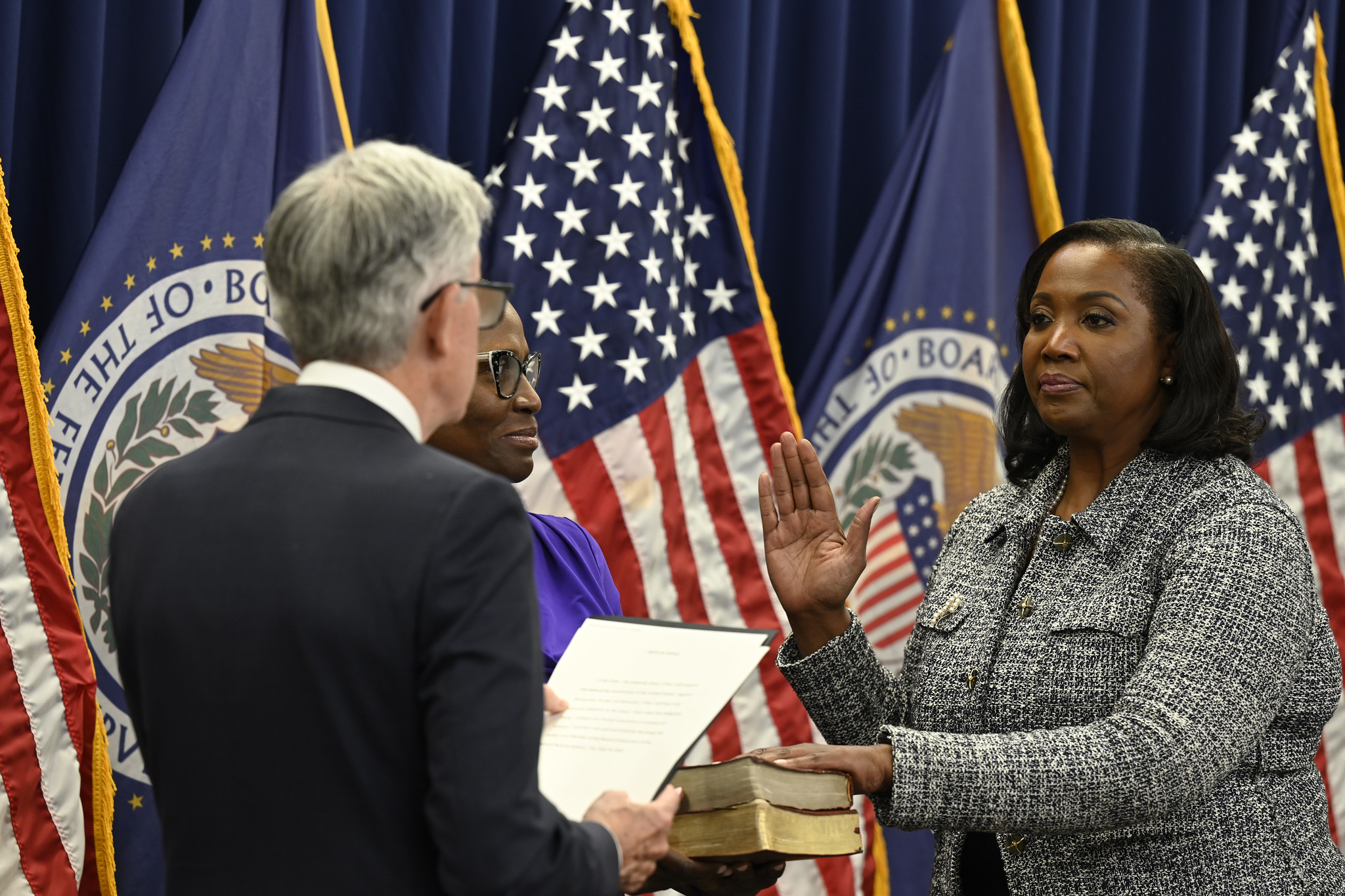
Federal Reserve Gov. Lisa Cook (pictured right) (Source: Federal Reserve)
The 5-4 decision also issued Monday in Trump v. Cook signaled the latest phase of a monthslong effort by Trump to oust Cook, wherein Cook alleged her attempted dismissal was without cause and therefore was awarded a preliminary injunction keeping her in place. The Court declined to stay that injunction while the litigation is ongoing.
The opinion of the court, delivered by Roberts, stated that because Congress “limited the powers of the President to remove Governors for good reason … any change in that scheme must come from Congress, not the courts.”
“That is why we cannot accept the Government’s contentions in this case,” said Roberts, writing for the majority. “To do so would allow the President to remove a member of the Federal Reserve at any time, for any reason, without any notice before, and without any judicial check after.”
What does this mean for banks and credit unions?
Save for the Fed, the tenure of leaders of agencies that exercise any kind of executive power are now subject in large part to the discretion of the president, rather than for-cause limits such as “inefficiency, neglect of duty, or malfeasance in office” established under Humphrey’s Executor.
More immediately, this shift could quite possibly erode the ongoing lawsuit launched by former NCUA board members Todd Harper and Tanya Otsuka, who were dismissed via email last April.
Scott Simpson, president and chief executive of America’s Credit Unions, said in a press release that while the Trump v. Slaughter decision “provides clarity on the president’s power regarding political appointees on independent agency boards and commissions,” his organization will continue advocating for a “full, three-person board.”
“We urge the President to put forward nominees for the two vacant seats and will continue to keep credit unions informed as this ruling is applied to the NCUA Board,” Simpson said in the release.
The FDIC and its leadership under the Supreme Court decision are also impacted.
Note: Commentary and opinions expressed by individuals who are not affiliated with KBRA Analytics do not necessarily reflect the views of KBRA Analytics, KBRA, or their employees. Such commentary is included solely to provide relevant industry perspectives.